Is a Sewage Backup Dangerous? What Connecticut Homeowners Should Do
Yes, a sewage backup is extremely dangerous because it involves Category 3 black water contaminated with harmful pathogens, parasites, viruses, and toxic bacteria like E. coli. When dealing with a sudden basement sewage backup, exposure to raw wastewater poses immediate health hazards to your family and pets. Professional sewage backup cleanup CT specialists follow strict biohazard protocols, utilizing full personal protective equipment (PPE), hospital-grade antimicrobial disinfectants, and structural drying equipment to eliminate contamination. Connecticut property owners facing black water damage must act quickly to isolate the affected area, avoid direct contact, and secure emergency remediation before toxic microbes saturate building materials. This guide explains why sewage overflows are so perilous, which porous items must be discarded, how insurance language impacts your coverage, and how certified technicians restore safety to your home.
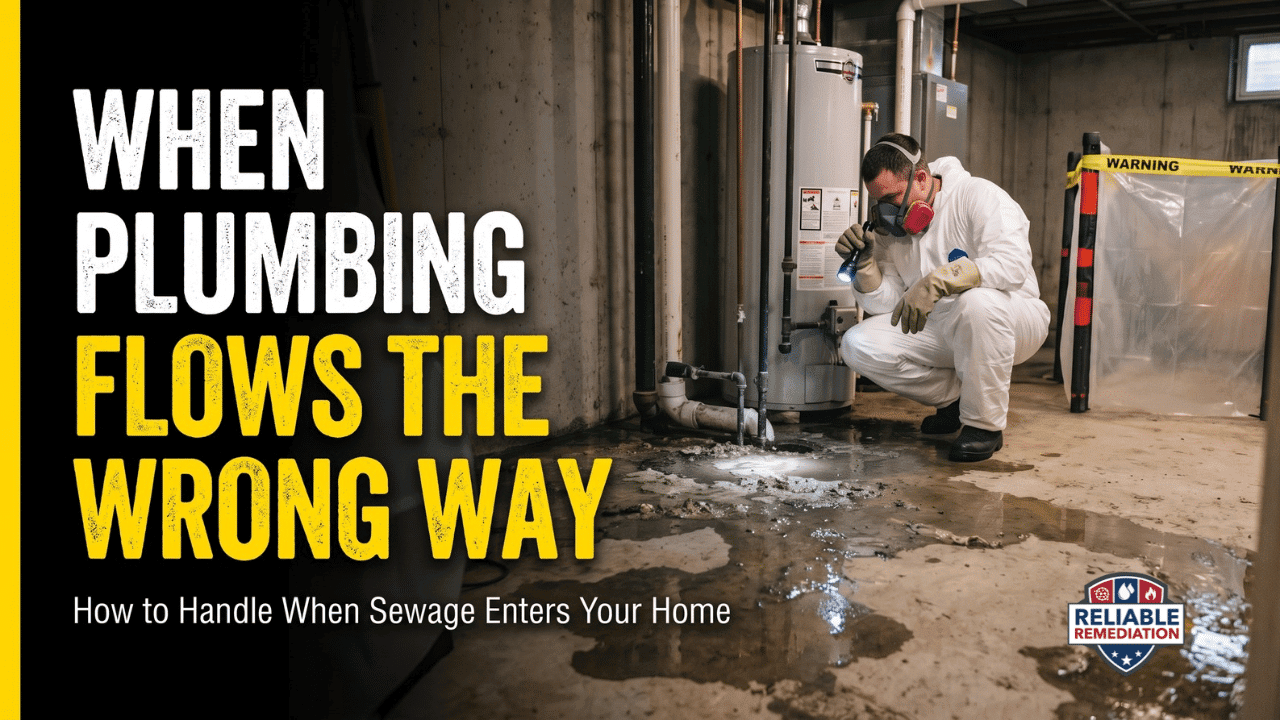
The Shock and Hazard of Sewage in Your Home
Your home is your sanctuary, the clean and safe environment where your family rests and recharges. Whether you live in a historic home in Plainfield, a colonial in Tolland, or a residence near the coast in Groton, walking downstairs to find foul-smelling wastewater pooling on your floors is a homeowner's worst nightmare.
The visual shock of human waste and dark sludge brings instant fear and stress. Is the air toxic to breathe? Are personal heirlooms ruined? How quickly can someone arrive to stop the spread? During an emergency, homeowners often worry about predatory contractors who use scare tactics to inflate repair costs. You deserve honest counsel from trusted local guides who arrive equipped to protect your family's health without financial games.
How Do Sewage Backups and Septic Overflows Occur?
A sudden wastewater backup does not happen in a vacuum. It is usually the result of gradual drain pipe restriction or overdue maintenance finally reaching a critical failure point:
Category 3 Black Water: Severe Biological Contamination
The restoration industry categorizes water intrusions into three distinct levels. A clean supply pipe leak is Category 1, while washing machine overflow is Category 2. A sewage backup is classified as Category 3, or black water damage, representing the highest tier of biohazard contamination.
Black water carries dangerous biological agents:
Because microbes aerosolize easily when disturbed, entering an affected area without proper personal protective equipment (PPE) poses severe respiratory and gastrointestinal risks. Certified technicians wear full Tyvek biohazard suits, nitrile gloves, rubber boots, and full-face respirators equipped with HEPA and organic vapor cartridges to ensure safety during remediation.
Porous vs. Non-Porous Materials: What Can Be Saved?
When sewage intrudes into living rooms or finished basements, building materials absorb contamination at different rates:
Learn more about our comprehensive structural Water Damage mitigation and emergency Flood Damage services.
Critical Steps for Connecticut Homeowners to Take Immediately
When raw wastewater backs up through floor drains, toilets, or utility sinks, quick preventative action reduces the contamination zone:
Insurance Coverage and Language Pitfalls: Why Words Matter
When contacting your insurance carrier to report wastewater damage, never use the word "backup." In insurance terminology, that specific phrase suggests that the city sewer mains failed and forced waste into your home. Standard homeowners insurance policies frequently exclude off-site sewer backups unless you have added a specific sewer rider or endorsement.
In most homes, the emergency is actually an accidental plumbing overflow caused by an internal restriction or soft-tissue blockage inside your private plumbing lines. Using accurate terminology from your very first conversation can prevent an immediate, wrongful claim denial and months of frustrating appeals.
This is where professional documentation is invaluable. Reliable Remediation documents the scene thoroughly using high-resolution project photos, moisture maps, and written origin reports. By establishing that the loss originated from an internal fixture overflow or localized line obstruction rather than an external city main, Reliable Remediation equips property owners with clear, factual evidence to discuss the loss fairly with their insurance adjuster.
Your Trusted Local Guides in Eastern Connecticut
At Reliable Remediation, the mission is to help Eastern Connecticut families resolve hazardous property emergencies quickly and safely. Based in Brooklyn, CT, Reliable Remediation operates as an independent restorer, working directly for the homeowner rather than an insurance carrier network.
Every restoration project is backed by our written Pricing Guarantee: Reliable Remediation guarantees that your final bill will not exceed the total estimated dollar amount by more than 5% without your prior approval. If hidden damage is uncovered, work is paused, photo documentation is provided, and your written approval is obtained before moving forward.
Our Simple Three-Step Plan