5 Shocking Truths About Your Home Insurance Claim (And How to Take Control)
Damage to your property is more than just a financial problem; it’s a deeply stressful and disruptive event. The anxiety, uncertainty, and feeling of losing control can be overwhelming. This guide is your tactical playbook for the insurance claim process, designed to transform you from a passive victim into an active, informed participant.
NO TIME TO READ? Check the Video Here >> Insurance Bad Faith: Your Policyholder Toolkit
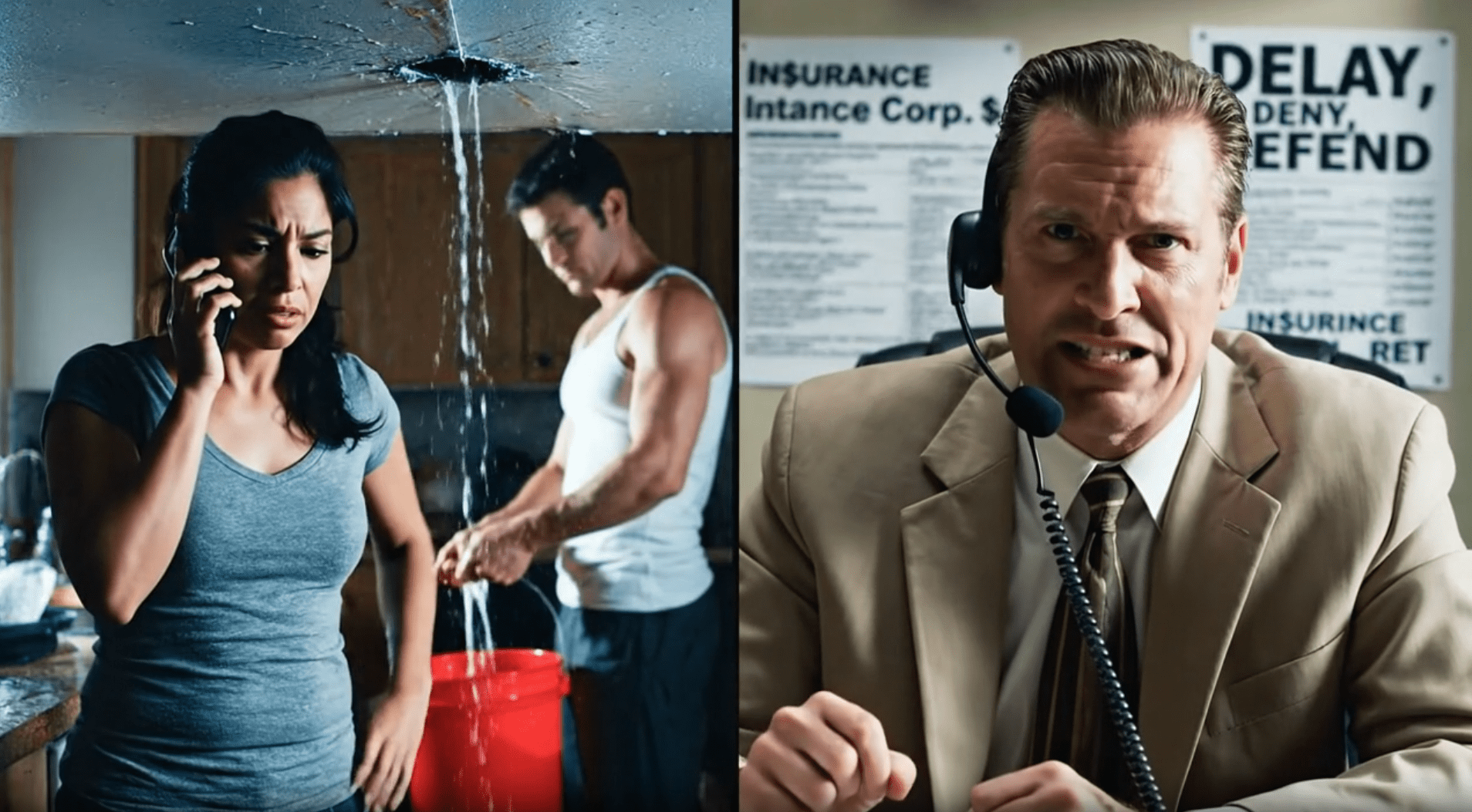
From Anxiety to Confidence: Reclaiming Control
When you face water damage, need fire mitigation, or discover a mold removal problem, the immediate problem isn't the repair - it's the massive headache of the insurance claim process. You fear being denied, receiving a lowball offer, or being forced to use a contractor who doesn't work for you. That uncertainty, paired with the risk of financial loss, is the real villain.
As your trusted advisors in Eastern CT, we believe in empowering you with facts. By revealing five critical, often misunderstood truths, we provide the plan you need to reclaim control, ensure a fair outcome, and restore your peace of mind.
1. The Adjuster Sent By Your Insurer Works For Them, Not You.
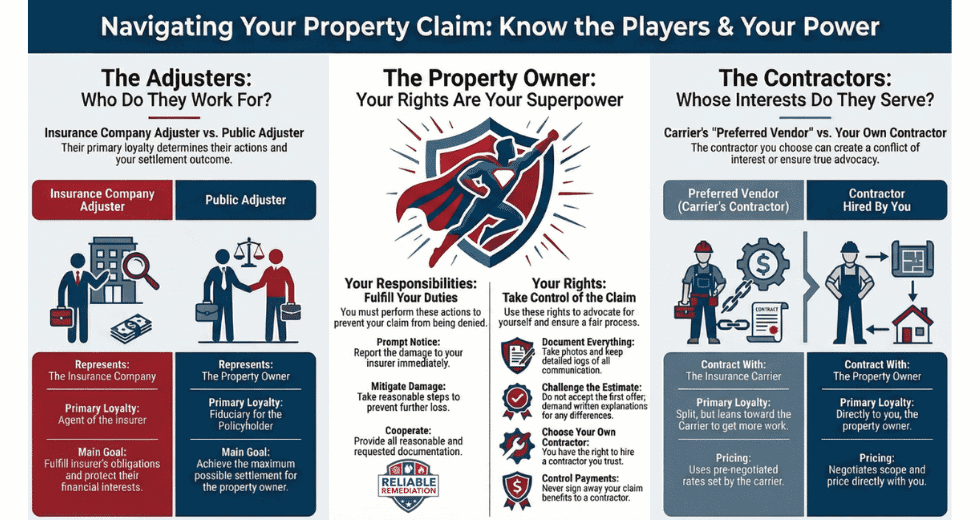
This is the most critical and misunderstood relationship in the claims process. While an insurance company adjuster (whether staff or independent) is required to deal fairly, their primary loyalty is to the insurance company that employs them. They are tasked with investigating the loss and evaluating repair costs on behalf of the insurer, protecting the insurer's financial interests while adhering to the policy terms.
In contrast, you have the right to hire a Public Adjuster to represent you. A Public Adjuster is your fiduciary, which legally obligates them to place your financial interests first. Understanding this distinction is the single most important concept you must grasp to protect yourself during a water damage or fire mitigation negotiation.
2. Their "Preferred" Contractor Might Not Be Your Best Choice.
When your insurance carrier recommends a "Preferred Vendor" or "Program Contractor," it can seem like a helpful shortcut. However, this contractor has a pre-existing relationship with your insurer, which creates a significant conflict of interest that puts your financial recovery at risk.
Here are the primary risks of using a preferred vendor:
- Pressure to Lower Costs: They may cut corners on materials or scope to meet the carrier's pre-negotiated budget, rather than performing the most comprehensive fire mitigation or mold removal.
- Diminished Advocacy: They are less likely to fight for you in a dispute with the adjuster over the necessary scope or quality of repairs, as it could jeopardize their relationship with the insurer.
- Loss of Control: By accepting a preferred vendor, you delegate the crucial selection and negotiation process to the insurance carrier.
Remember that you have the right to select your own contractor. To ensure a contractor's sole loyalty is to you, you should avoid the carrier's "Preferred Vendor," especially if you suspect a conflict of interest.
3. Waiting for Permission to Prevent More Damage Is a Costly Mistake.
Many homeowners mistakenly believe they must wait for an adjuster's approval before taking action to protect their property. This is incorrect and can be a costly error.
Your insurance policy contains a "duty to mitigate further damage," which contractually requires you to take reasonable, temporary steps to protect your property from further damage. This includes actions like tarping a roof after a fire, or hiring a water damage extraction company to dry a flood immediately.
Failure to meet this obligation can give the insurer legal grounds to deny your insurance claim for any damage that occurred after the initial event. You have the authority—and the responsibility - to act immediately. You do not need authorization from your insurance company or your adjuster to start mitigation work - just be sure the restoration company documents the loss appropriately.
4. You Have the Right, and the Duty, to Challenge a Lowball Offer.
The insurance company's first settlement offer is just that - an offer. It is a starting point for negotiation, not a final decision. You should never accept it without a thorough, independent review. A successful insurance claim hinges on your ability to take an active, offensive role in the negotiation.
Follow this tactical, three-step plan to take control:
- Build Your Case with Meticulous Documentation: Take extensive photos and videos before, during, and after any mitigation or repair work. Keep a detailed log of every conversation with your insurer.
- Seize Control with Your Own Estimate: Obtain a detailed, line-item proposal from a reputable, local expert (like us!) who is not affiliated with your insurance carrier. This independent estimate serves as a powerful, fact-based counterpoint to the insurer's evaluation.
- Force Accountability with a Line-by-Line Challenge: If the insurer's estimate is lower than your independent proposal, demand a detailed written explanation for every single difference in scope or price.
A successful insurance claim is won by using facts and documentation to enforce your contractual rights.
5. Your Best Defense is an Unbiased Assessment.
The ultimate failure in the insurance claim process is wasting time and money on unnecessary or incomplete work. This happens when you rely on an estimate from a company motivated purely by a sale. Because Reliable Remediation is the only company that offers a paid evaluation for our expertise before making recommendations, we eliminate your fear of paying for a service that is unnecessary or inflated due to add-ons - guaranteeing our clients can move forward with confidence.
As your trusted advisors, we eliminate that risk. Our Paid Evaluation guarantees integrity: we provide you with our unbiased expertise and a written report with photo documentation of the findings. This ensures you know the real scope of your mold removal or water damage needed, giving you the confidence to negotiate with your carrier effectively.
Reclaim Your Peace of Mind
The property damage claims process is intimidating, but it is not insurmountable. By understanding the roles of the players, knowing your rights and duties, choosing your own experts, and documenting everything, you shift from being a passive recipient of decisions to the person in control of the outcome. You can navigate this challenge and ensure you receive the fair and just settlement you are owed.
We believe no one deserves to live in fear of their home making them sick – at Reliable Remediation we help people find peace of mind by restoring the health and safety of their home after water, fire, and mold damage.
Now that you know the rules of the game, are you prepared to be an active player in your own financial recovery?