Why Does My House Smell Musty During Humid Weather?
During humid weather, your house smells musty because indoor relative humidity levels rise above 60%, creating the ideal environment for dormant mold spores in dust, drywall, carpeting, or wood to activate and release volatile organic compounds. Furthermore, increased temperature and high humidity cause the microscopic pores of building materials and fabrics to expand, releasing deeply trapped odors into your indoor air. Experiencing a persistent musty smell in house rooms often indicates a humidity bloom or hidden fungal growth, particularly during damp Connecticut summers. Even when you experience a mold smell but no visible mold, high moisture levels in basements, crawlspaces, or wall cavities are actively feeding microscopic organisms. This guide explains why summer dampness triggers a heavy humidity odor CT homeowners frequently notice, how hidden moisture spreads through your living space, and how to safely eliminate the odor source to restore fresh air to your home.
The Worry of Hidden Odors in Your Home
Your home is your sanctuary, the place where your family should feel completely safe, comfortable, and at ease. Whether you live in a historic colonial in Tolland, a quiet neighborhood in Mansfield, or a shoreline property in Groton, you work hard to maintain a clean, healthy living environment. Walking into a room and being hit by a damp, earthy odor disrupts that peace of mind.
It immediately triggers a wave of frustration and anxiety. Is there hidden fungal growth behind the walls? Are my children breathing in bad air? Will this ruin my home value? The hardest part is the uncertainty when you smell an odor but cannot find any visual source. Even worse, many homeowners fear calling a contractor who might use scare tactics or offer a cheap, temporary coverup instead of solving the problem. You deserve honest answers from trusted local guides who prioritize your family's health and safety.
Why High Humidity Activates Hidden Mold
During hot, muggy summers across Windham, Tolland, and New London counties, outdoor moisture levels surge. When indoor relative humidity stays at or above 60% for more than 72 hours, it could cause what building science experts call a humidity bloom.
Mold spores and organic dust exist naturally in every home. When high humidity saturates organic dust on unconditioned surfaces like basement joists, wall cavities, or carpet fibers, mold spores activate and begin releasing microbial volatile organic compounds. This off-gassing creates the classic musty smell in house spaces.
In many cases, homeowners encounter a mold smell but no visible mold. Fungal colonies often thrive out of sight in unconditioned structural spaces and moist utility zones:
Relying on air fresheners, candles, or cheap chemical fogging only masks the scent temporarily. Eliminating a persistent humidity odor CT homes experience requires addressing the root moisture source and physically cleaning or removing contaminated materials.
Your Trusted Local Guides to Clean Air
At Reliable Remediation, the goal is to help Eastern Connecticut homeowners transition from uncertainty to complete peace of mind. Based in Brooklyn, CT, Reliable Remediation operates as an independent restorer, working solely for property owners rather than insurance company networks.
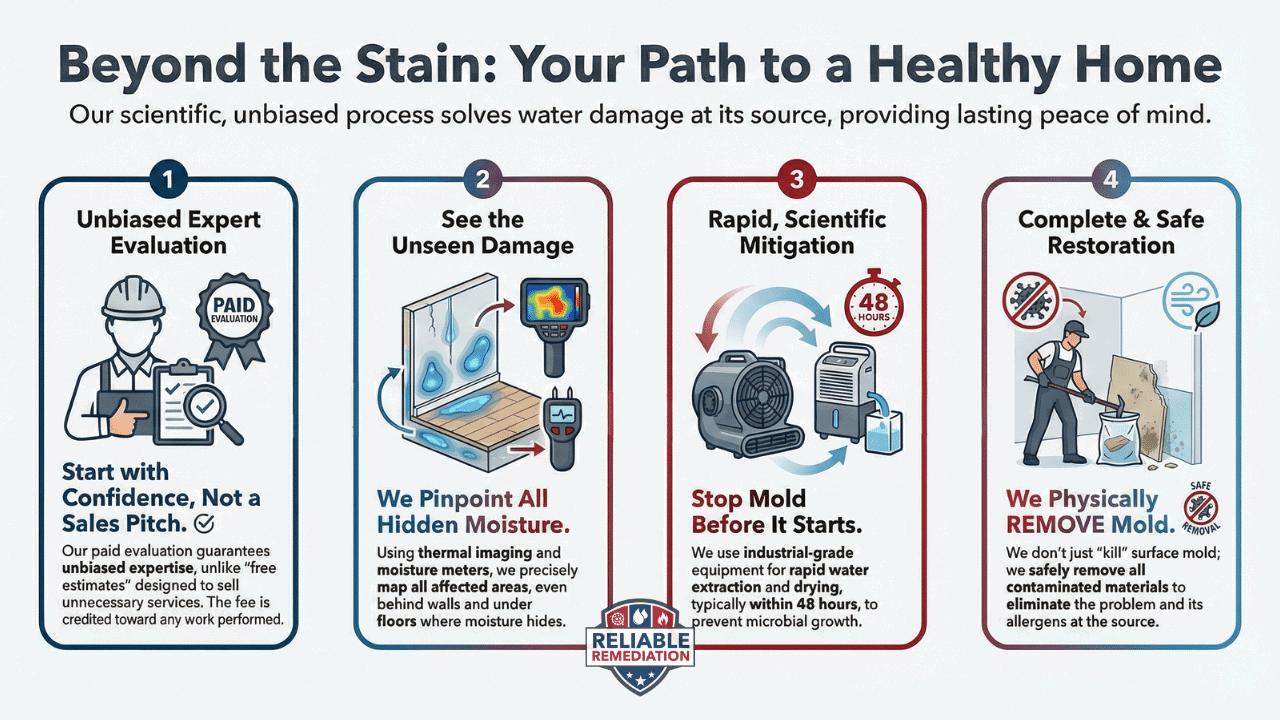
Instead of high-pressure sales pitches disguised as free estimates, Reliable Remediation offers a $250 Paid Evaluation. A certified technician uses thermal imaging cameras and moisture meters to pinpoint hidden moisture sources and deliver a full written photo report. If professional remediation is required and you hire Reliable Remediation for the project, 100% of the $250 fee is credited directly back to your final bill.
Not sure if it's a humidity bloom or something more serious? Get a certified diagnosis before you spend a dime on remediation.
Reliable Remediation backs every remediation project with written contract guarantees:
Our Simple Three-Step Plan