A Better Way to Dry a Wet Basement
Michael’s day starts simply enough, it’s a quiet Sunday morning and he goes downstairs with his coffee to watch the news before the kids wake up. As he steps off the last step to the carpeted basement floor – his stocking feet get COLD. The carpet went SQUISH – SQUISH as he started walking toward the couch. What the….?

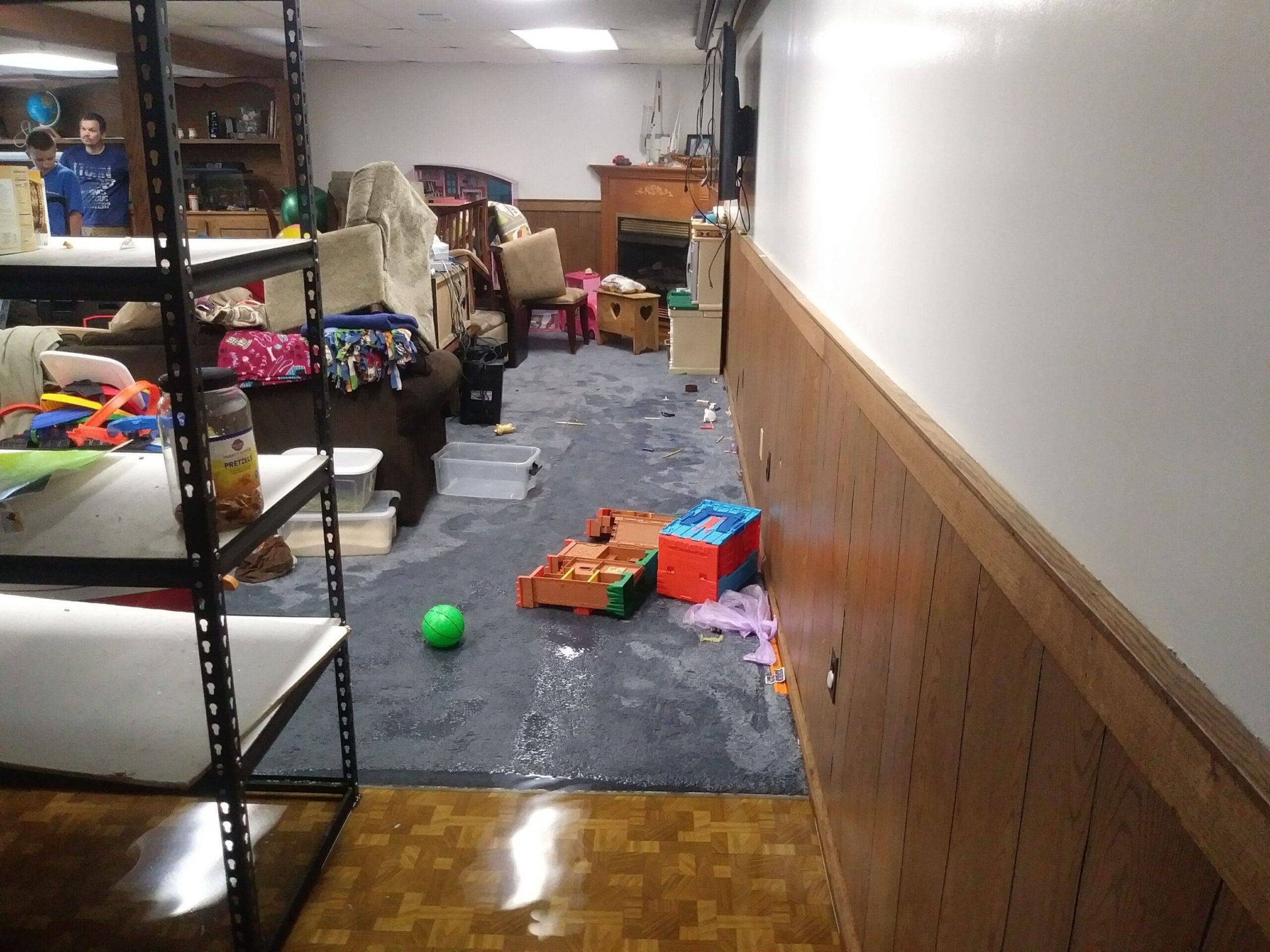
His first thought – was it the dog? Did the dog have an accident? Ewww gross…then he looks around and realizes there was water everywhere – not deep, but definitely everywhere – SQUISH – SQUISH. This was not the dog (at least it had better not be)!
FIND THE SOURCE
Where could all this water come from? Michael started to look closer and think about possible sources.
- There has been a lot of rain – could it be from outside?
- We have a sump pump – could it be broken?
- Is there a leak from a pipe?
- What about the water heater? Could that have failed and dumped all this water into his home?
His heart sinks as he realizes his quiet Sunday morning has taken a terrible turn for the worse. Panic is starting to set in. “What’s broken? How am I going to get it fixed? Do I need a plumber? How much is this going to cost me?”
MICHAEL NEEDS A PLAN!!!!
He starts going through a checklist in his mind, “get some shoes on, find the leak (or the cause of this squishy mess), get my shop vac, and get this all dried out!”
It takes him some time to get everything together and he heads to the utility room…looks like the water heater is the culprit and there is standing water on the concrete in this area of the basement. He plugs in the shop vac and gets to work. As he’s sucking up water, he’s trying to think if he knows any plumbers…and the shop vac suddenly stops sucking. Hmmm, that was quick! He checks inside and it’s full. He picks it up to carry outside and dump – “Oooo, that’s heavier than I thought.” As he carries it up the bulkhead stairs outside, water is spilling a little here and there. Finally, he gets it outside and dumps it on the back lawn.
He heads back down to the utility room and realizes the puddle he just sucked up – IS BACK! “Ok, I’ve got this…,” he resolves. He gets the shop vac running again and…it’s full again. As he carries it toward the bulkhead he realizes he tracked dirt (now mud) all over the wet carpet. Ugh, something else to clean.
He repeats this process over and over for the next 40 minutes. It’s almost like shoveling against the tide – every time he sucks this puddle up – the water comes right back to the same spot before he even gets back. “How am I going to get ALL of this water out of here?” he mutters out loud. Not only that, there’s a trail of mud between him and the backyard.
As the frustration builds, Michael’s wife calls down the stairs, “How’s it going, hun?”
“It’s fine. I’M FINE!” He snaps.
He suddenly realizes…He needs help with this mess.
FINDING A TRUSTED PROFESSIONAL
He searches for “water damage” and several companies come up. He calls a couple of National Companies whose names he recognizes, but when he calls the numbers, he gets an answering service and a voicemail message with a promise to call back within 24 hours. He wants to talk to a person about his problem. A professional, not a phone screener.

Then he calls Reliable Remediation…the phone rings…once, twice…and then he hears a person answer the phone, “Thanks for calling Reliable, this is Russ.” That’s the same name as the owner of the company. Did the owner of this company just personally answer his distress call at 9:40 am on a Sunday? He did!
Russ seems to understand everything he was dealing with as Michael explains his morning “adventure.” He assures Michael that his team can help him figure out the problem, get it cleaned up, and dried out.
A Better Way to Dry a Wet Basement
Michael is given a game plan to stay safe and start salvaging items from further water damage.
- Safety – He is told to shut off power to the affected area. He hadn’t even considered the danger of electricity in his situation as he looks around the basement at all the electronics surrounding him, all while standing in a puddle!
- Stop the water – Russ recommends Michael turn off the water to the water heater so no other damage could occur.
- Minimize damage – He also suggests Michael get wet items up and off the floor and start saving important items. Also, to be careful not to track the contaminated water to clean areas of the home.
- Protect furniture – Russ proposes that he get any wooden furniture off the wet carpet or set them on saucers or plastic so the wooden portions won’t soak up water and cause more damage.
Russ and his Reliable team show up before lunch, and by that time Michael is calm and working toward his goal of salvaging his basement (and his Sunday).
It’s natural to worry when you discover property damage.
At Reliable Remediation, we help families find peace of mind
by restoring their home from water, fire, and mold.