What Should I Do Immediately After My Basement Floods in Eastern CT?
If your basement or crawl space has flooded, the most important steps are to ensure your safety by turning off the power, documenting the damage for insurance, and removing standing water within 24 to 48 hours to prevent mold growth. In Eastern Connecticut, seasonal flooding is often caused by a combination of rapid snowmelt, heavy spring rain patterns, and rising water tables that create immense hydrostatic pressure against your foundation. This blog provides a step by step recovery plan to help you protect your home and regain your peace of mind.

Protecting Your Eastern CT Home
Every homeowner in towns like Norwich, Willimantic, and Putnam knows the beauty of a New England spring. However, that beauty comes with a hidden threat. As the thick snowpack from our Eastern Connecticut winter begins to thaw, billions of gallons of water saturate the ground. When you add the predictable "April showers" into the mix, the soil simply cannot hold any more moisture.
For many of our neighbors, this is where the story takes a dark turn. You head downstairs to grab a load of laundry or a seasonal decoration only to find your feet submerged in cold, murky water. It is a moment of pure frustration and localized disaster that no one should have to face alone.
The Problem: Why Your Basement Floods in the Spring
The issue in Eastern Connecticut is rarely just a "leaky pipe." Instead, we face three primary external enemies:
- Melting Snows: As temperatures rise, the snow piles against your foundation melt quickly, sending a concentrated stream of water directly toward your basement walls or into your crawl space.
- Spring Rain Patterns: Our region often experiences heavy, sustained rainfall in March and April. When this rain hits frozen or already saturated ground, it has nowhere to go but inside your home.
- Rising Water Tables: This is the invisible culprit. In areas near the Thames River or the Quinebaug River, the underground water level (the water table) rises significantly during the spring. This creates hydrostatic pressure, which literally pushes water through microscopic cracks in your concrete floor and walls.
It feels wrong that the home you worked so hard for is being attacked by the very environment that makes it beautiful. You deserve a dry, safe, and healthy living space.
Your Trusted Local Guides
We understand the stress of a wet basement because we live and work right here in Eastern CT. We have seen the damage that a rising water table can do to a home in Tolland or New London County. As your trusted local experts, we have spent years helping our neighbors navigate these exact "spring soak" scenarios. We provide the empathy you need during a crisis and the authority required to fix the problem for good.
If you are dealing with standing water, start with water damage restoration so moisture is removed quickly and correctly. If damp conditions have been lingering, learn more about mold removal to protect indoor air quality. If the flooding involved an appliance or electrical issue, review our approach to fire damage recovery as well.
The Plan: What To Do Immediately
When the water starts rising, you need a clear path forward. Follow these four steps to minimize damage:
- Step 1: Prioritize Safety Above All Else Never step into a flooded basement until you are certain the power is off. Water and electricity are a deadly combination. If you cannot reach the breaker box safely, call an electrician immediately.
- Step 2: Document the Damage Before you start the cleanup, take clear photos and videos. Your insurance company will need proof of the water levels and any damaged personal belongings. This is critical for your claim in towns like Mansfield or Groton where flood insurance requirements can be specific.
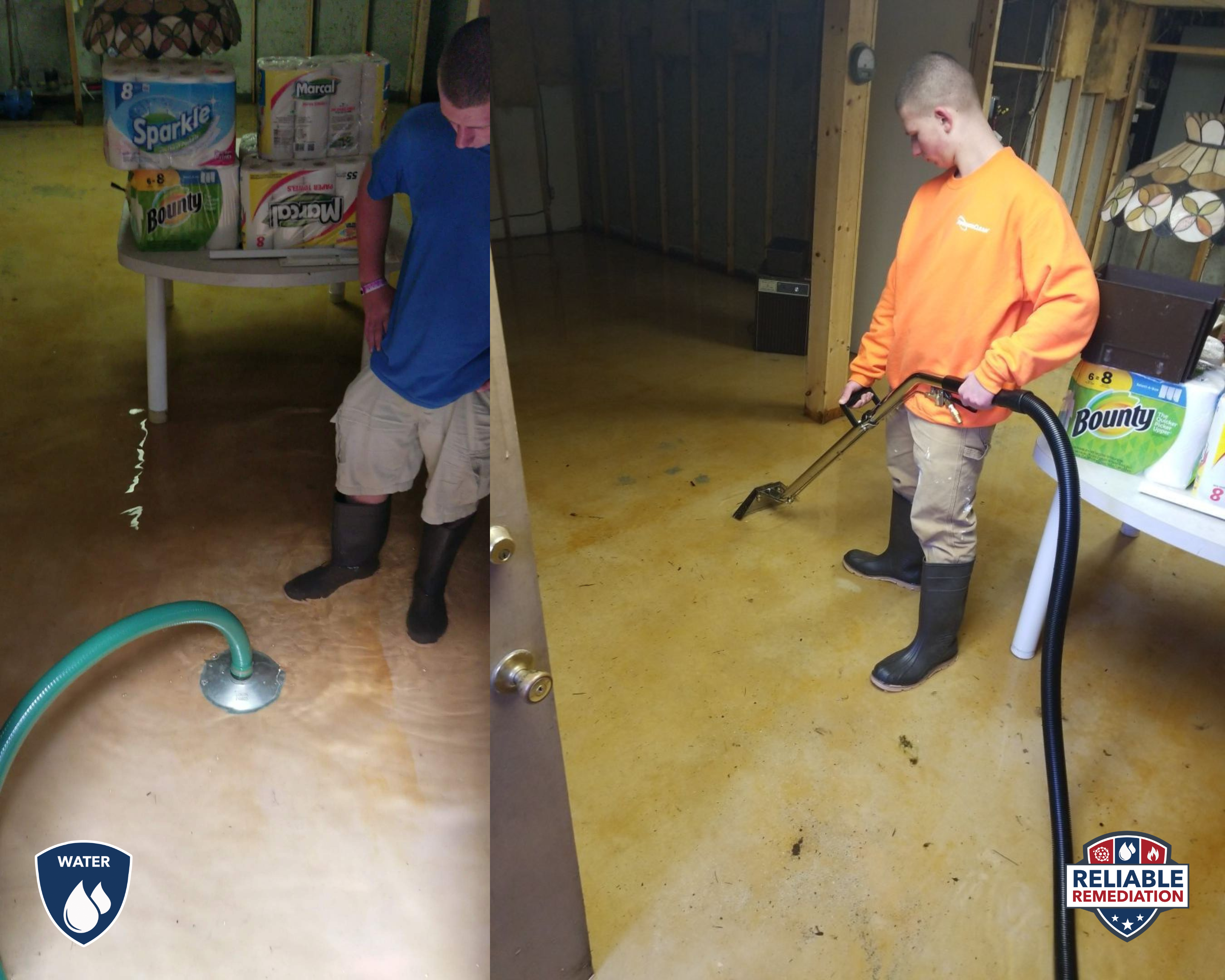
- Step 3: Rapid Water Extraction Time is your greatest enemy. Mold spores can begin to colonize in as little as 24-48 hours. Use a sump pump or a wet/dry vacuum to remove as much standing water as possible. If the flooding is more than an inch deep, it is time to call in professional extraction equipment.
- Step 4: Professional Inspection and Drying A basement might look dry, but moisture often remains trapped in drywall, wooden studs, and behind baseboards. We use industrial grade dehumidifiers and air movers to ensure the humidity levels are brought back to a safe range, preventing long term structural decay.
A Call to Action
Do not wait for the next heavy rain to see if your "DIY fix" worked. If you are standing in water right now, or if you noticed seepage during the last thaw, contact our team today. We will provide a thorough inspection and a permanent solution to keep the Connecticut water table where it belongs: outside.
What is at Stake?
If you ignore a damp crawl space or a minor basement leak, the "Failure" side of the story is predictable. Mold will eventually impact your family’s respiratory health, and constant moisture will rot your floor joists, leading to thousands of dollars in structural repairs.
However, when you take action, you experience "Success." You gain the confidence to finish your basement, the ability to store your valuables without fear, and the peace of mind that comes with knowing your home is protected against whatever the New England weather throws at it.
We believe no one deserves to live in fear of their home making them sick – at Reliable Remediation we help people find peace of mind by restoring the health and safety of their home after water, fire, and mold damage.