Is That BLACK Mold in My Attic?
We often get these types of questions after an energy audit, home inspection during a real estate sale, or that annual visit to get decorations in December. The discovery of black streaks or spotting and sometimes what may be three-dimensional growth can be alarming. Many people think this is caused during hot and humid weather – but here in the Northeast – it’s almost always happening during cold winter months – and it’s from condensation.
Condensation in attics is a common issue that homeowners grapple with, it can lead to damage and sometimes mold. Here we will share the top three causes of attic condensation: inadequate insulation, improperly vented exhaust fans, and unbalanced ventilation.
- Inadequate Insulation: One of the primary reasons for condensation in attics is inadequate insulation or gaps in insulation. Insulation acts as a barrier that prevents warm air from escaping the living spaces below and reaching the cold surfaces of the attic. When insulation is insufficient or improperly installed, warm air can penetrate the attic, causing condensation as it meets the cooler surfaces.
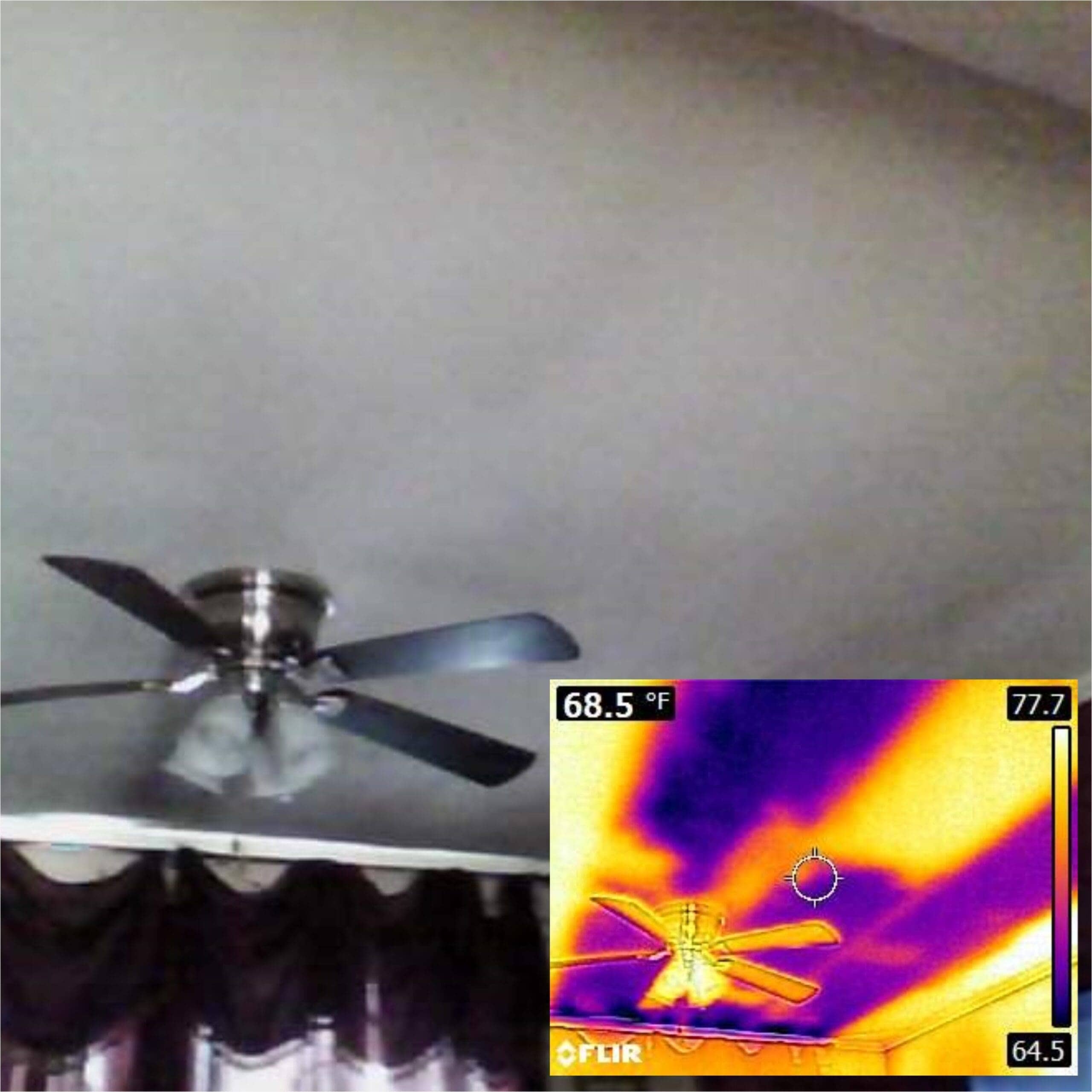
Solution: To address inadequate insulation, homeowners should consider adding or upgrading insulation in their attics. This not only helps regulate temperature but also minimizes the risk of condensation. Energy.gov – Adding Attic Insulation
- Improperly Vented Exhaust Fans: Another culprit contributing to attic condensation is improperly vented exhaust fans. Bathrooms and kitchens often have exhaust fans that expel moisture and odors outside. If these fans are not correctly vented to the exterior of the home, the moisture can accumulate in the attic, leading to condensation issues. These fans should be vented through a gable end or through the roof – never into a soffit.
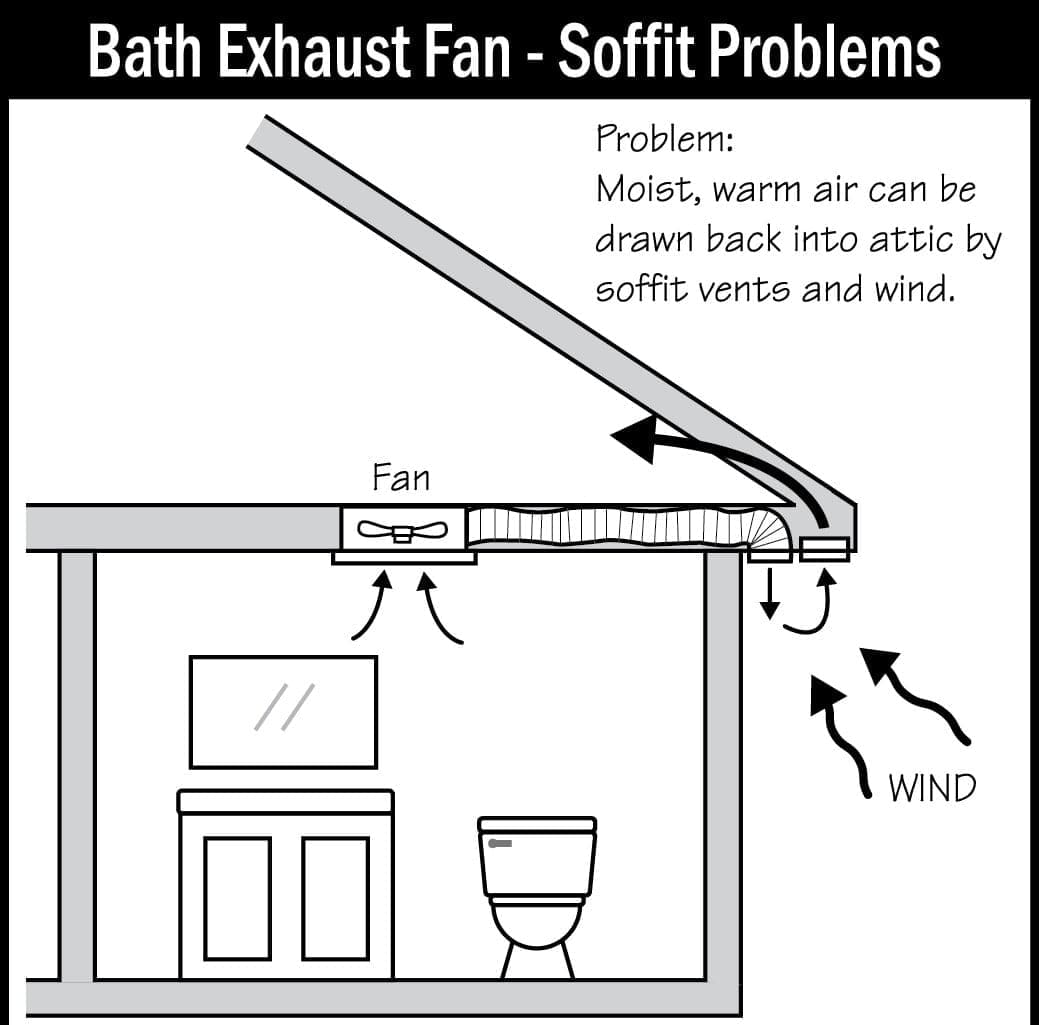
Solution: Homeowners should ensure that exhaust fans are vented through a gable end or through the roof and not into the attic space or a soffit. Proper venting channels moisture away from the attic, reducing the likelihood of condensation.
- Unbalanced Ventilation: Balanced ventilation is crucial for maintaining optimal conditions in the attic. When ventilation is unbalanced, with an unequal distribution of intake and exhaust vents, it can disrupt the natural airflow. This imbalance can create pockets of stagnant air where condensation is more likely to occur.
Examples of Unbalanced Ventilation:
- Mixing ventilation types e.g. gable vents installed with soffit and ridge vents. Ventilation types should not be mixed.
- Soffit vents covered with insulation and/or no baffles/propavents installed to allow air flow.
Solution: Achieving balanced ventilation involves ensuring an equal distribution of intake and exhaust vents. Homeowners should consult with professionals to assess and improve their attic ventilation system.
Is That BLACK Mold in My Attic?
MOLD RISKS
Mold needs water to grow. Condensation can cause microbial staining and even three-dimensional growth. Is it time to panic? NO! If there is mold present – it CAN be cleaned and removed.
Mold affects everyone differently, but it can be less of a concern when it is outside the living space (like an attic). It can be difficult to determine how much this issue may be affecting the indoor air quality of the living space below (if at all), but generally speaking the impact may be minimal (based on stack effect and general building science).
Condensation and mold in attics is a preventable issue that stems from specific causes, with inadequate insulation, improperly vented exhaust fans, and unbalanced ventilation being the top three. Regular maintenance and proactive measures are key to ensuring a healthy and moisture-free attic space.
Reliable Remediation recommends checking your attic at least twice per year and at least once during cold weather.

Things to look for:
- Sweating or rusty nails in the sheathing;
- Staining where bathroom vents are located;
- Condensation on sheathing.
If you find these things or anything else that doesn’t look right – we can help you figure out what may be happening and how best to move forward, solve the problem, and remove any mold or staining if necessary.
We believe no one deserves to live in fear of their home making them sick – at Reliable we help people find peace of mind by restoring the health and safety of their home after water, fire, and mold damage.