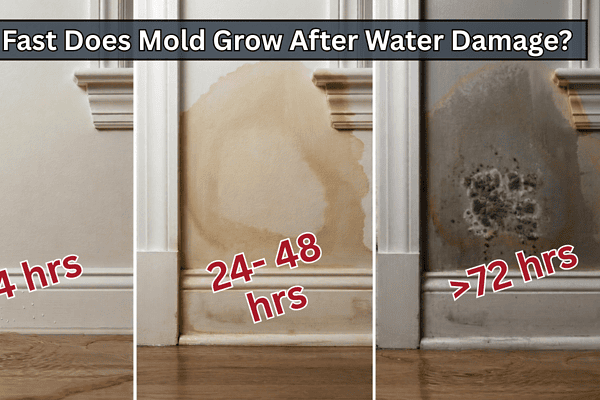
Mold spores begin to colonize and grow within 24 to 48 hours after water damage occurs. In the humid climate of Eastern Connecticut, this timeline can be even shorter if moisture is not professionally removed. To prevent long-term health risks and permanent property damage, it is critical to address standing water or damp materials immediately.
You walk into your basement in Norwich, CT, and see a puddle. Or maybe you find a dark stain on the ceiling of your child's bedroom in Windham after a heavy storm. In that moment, your heart sinks. You are not just looking at wet drywall or a damp carpet. You are looking at a ticking clock.
As a homeowner, your home is your greatest asset. It is the place where your family should feel safe. When water enters the picture, that safety is threatened. You begin to worry about the cost of repairs. You worry about the health of your kids. Most of all, you worry: how fast does mold grow?
The Hidden Problem: The Clock is Ticking
The scientific answer is simple. Mold needs very little to survive. It needs moisture, a food source like wood or paper, and time. In most cases, mold starts to grow within 24 to 48 hours.
In Eastern Connecticut, the humidity often stays high. This means that once your home gets wet, it stays wet. Mold spores are always in the air. They are just waiting for a drop of water to land on a surface. Once they land, they begin to colonize. If you wait more than two days to start the drying process, you are no longer just dealing with water. You are dealing with a living organism that can spread through your walls and into your air.
Agitating the Problem: The "Insurance Game" and the "Unjust No"
Many homeowners in New London County make the mistake of waiting. They think they should wait for an insurance adjuster to call them back before they touch anything. This is a dangerous trap. The insurance industry often uses a playbook of "Delay, Deny, Defend."
While you wait for a phone call, the mold is growing. Standard free inspections often miss what is happening behind the scenes. A "free estimate" from a big-box contractor might look at the visible damage. However, it ignores the hidden moisture trapped in your subfloors or behind your baseboards.
If you wait, the damage becomes more expensive. Even worse, your insurance carrier might try to deny your claim. They may say you did not "mitigate" the damage fast enough. It is not fair that you have to fight your insurance company while your home is at risk.
No one should have to live in fear of their home making them sick.
The Mold Growth Timeline in CT: What to Expect
Understanding the mold growth timeline in CT is the first step to reclaiming your home. Whether you are in Plainfield or Stonington, the rules of science remain the same.
The First 24 Hours: The Window of Opportunity
During the first day, water spreads quickly. It soaks into porous materials like drywall, insulation, and wood. At this stage, mold has not yet begun to colonize. If you can remove the water and start professional drying now, you can often avoid mold entirely. This is why we tell our neighbors in Glastonbury, CT, to call for help the moment they see a leak.
24 to 48 Hours: The Growth Begins
This is the critical window. Mold spores begin to germinate. They form tiny roots that dig into your walls and floors. You may not see them yet, but they are there. This is why a professional evaluation using moisture meters is so important. You cannot manage what you cannot measure.
48 to 72 Hours: Visible Signs and Odors
By the third day, mold often becomes visible. You may see black, green, or white spots. You might also notice a "musty" smell. This odor is caused by gases released by the mold as it eats your home. At this point, the health risks to your family increase.
Beyond 72 Hours: Structural Risks and Denials
If water sits for more than three days, drying in place stops being a viable option. Growth has likely started, especially between layers of building materials e.g. under flooring and behind trim. This is also when insurance companies are most likely to argue that the damage was "pre-existing" or caused by "lack of maintenance."
If you've found water damage in your home, don't wait. Every hour matters when it comes to mold.

What Happens if You Wait?
The longer it sits, the worse it gets. If you ignore the moisture, the failure is predictable. Some people try to fix the problem themselves. They use bleach or "spray and pray" tactics they found online. But DIY often makes things worse. If you do not contain the area, you can spread mold spores through the rest of your home. You end up paying a professional to do the work twice because it was not done to the national Standard of Care the first time.
The Happy Ending: Reclaiming Your Peace of Mind
Imagine walking back into your home in Killingly or Groton and feeling a sense of calm. The air is clean. The musty smell is gone. You have a Photo Report in your hand. This report proves your home is scientifically dry and healthy.
You have moved from being a worried victim to being a "Guardian" of your property. You have your peace of mind back because you know the issue was resolved correctly.
You deserve to have your home fixed right the first time. You deserve a restoration process that is based on science, not guesswork. We believe that what happens to your home also happens to you. That is why we focus on the people inside the home, not just the building itself.