service@reliableremediation.com

(860)288-5174

What Happens During Professional Fire Damage Restoration?

Call NowRequest an Evaluation

What Happens During Professional Fire Damage Restoration?

During professional fire damage restoration, certified specialists follow a multi-phase recovery process that includes emergency stabilization, structural drying, detailed soot and smoke removal, contents cleaning, and full property reconstruction. Navigating the complete fire damage restoration process requires specialized equipment to neutralize corrosive soot and extract thousands of gallons of firefighting water before mold develops. Whether dealing with a minor kitchen flare-up or severe structural fire, understanding the four core fire restoration steps helps property owners protect their investment and navigate insurance claims smoothly. With October recognized as Fire Prevention Month, taking time to understand how a home recovers from fire emergencies ensures your family is prepared. This guide explains how professional house fire cleanup CT specialists stabilize structures, salvage personal belongings, and safely rebuild your home.
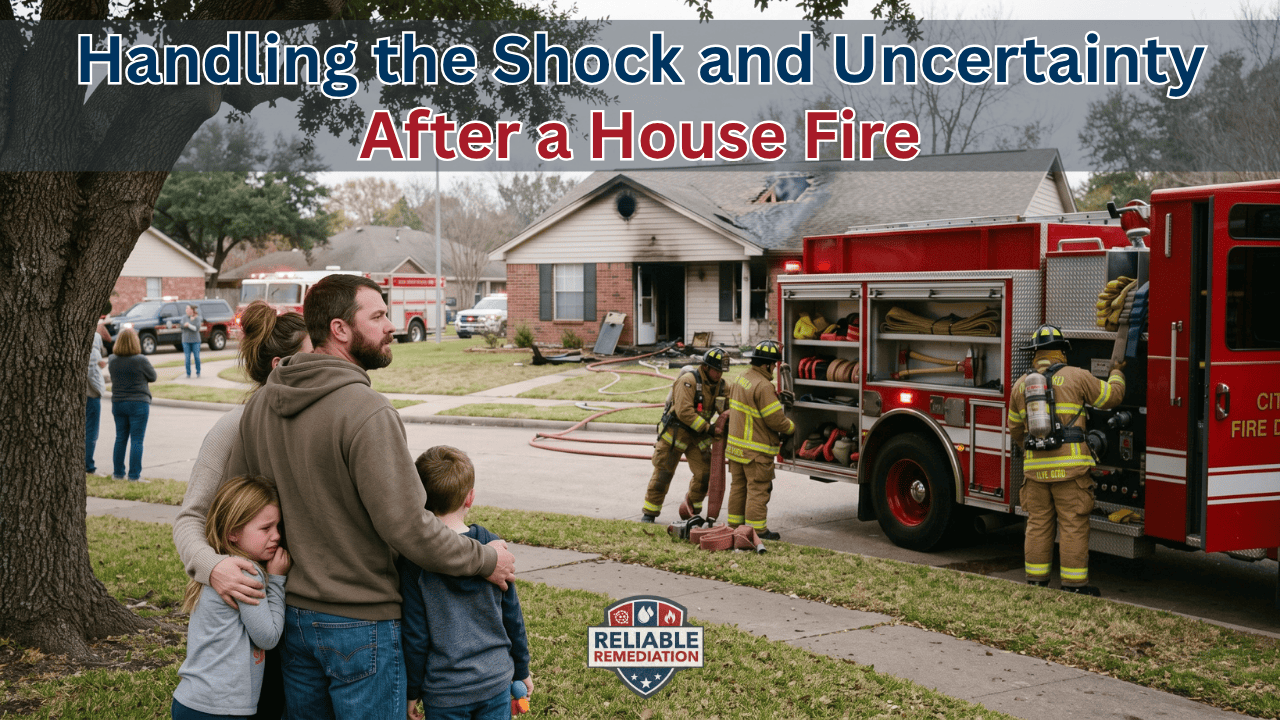
Handling the shock and uncertainty after a house fire in Eastern CT

The Shock and Uncertainty After a House Fire

Your home is your sanctuary, the secure place where your family should always feel protected. Whether you live in a historic residence in Woodstock, a colonial in Tolland, or a shoreline home in Groton, experiencing a fire turns your daily life upside down in minutes.

Standing outside your property while emergency responders finish their work leaves you facing overwhelming shock and uncertainty. Acrid smoke hangs heavily in the air, black soot blankets walls and personal keepsakes, and standing water from fire hoses pools across your floors. The immediate questions feel paralyzing. Where will my family sleep tonight? Can our treasured heirlooms be saved? How will we ever manage the insurance claim?

During this vulnerable moment, homeowners often face high-pressure calls from aggressive contractors or insurance adjusters rushing them to sign contracts. You deserve transparent, honest counsel from trusted local guides who prioritize your family's safety and emotional well-being above a quota.

The Four Stages of the Fire Damage Restoration Process

True recovery is never just a surface wipe-down. Certified restorers follow four distinct phases to return a home to pre-loss condition:

1. Emergency Stabilization and Water Extraction

The immediate priority after first responders clear the scene is securing the building envelope. Technicians board up broken windows, tarp damaged roofs, and secure exterior doors to prevent weather intrusion and unauthorized entry. Simultaneously, crews extract standing water left behind by firefighting operations. Industrial dehumidifiers and air movers are placed immediately to prevent structural rotting and stop secondary mold growth within the first 24 to 48 hours.

2. Precision Soot and Smoke Cleaning

Soot produced during a fire is highly acidic and chemically complex. Burning plastics, wood, and synthetic fabrics leave oily residues that pit metal fixtures, etch glass, and stain porous drywall within hours. Certified technicians use dry chemical sponges to lift loose soot tags without smearing petroleum oils deeper into wall cavities. Surface cleaning is followed by thermal fogging and hydroxyl generators to neutralize trapped smoke molecules at the molecular level. Learn more about our specialized structural Fire Damage restoration protocols.

3. Specialized Contents Handling and Pack-Out

Personal belongings require meticulous care. Restorers inventory, photograph, and pack salvageable contents to transport them to a secure, climate-controlled facility. Using ultrasonic wash systems, specialized textile laundering, and ozone chambers, technicians deodorize and clean clothing, electronics, books, and family furniture while structural repairs take place.

4. Structural Repair and Reconstruction

Once soot and odor are completely eradicated, full rebuilding begins. This final phase involves replacing charred framing studs, hanging fresh drywall, refinishing hardwood floors, reinstalling insulation, and repainting. To review transparent budget breakdowns for these phases, explore our detailed Fire Damage Pricing guide.

October Fire Prevention Month and Independent Advocacy

October is National Fire Prevention Month, an ideal reminder to test smoke alarms, inspect kitchen fire extinguishers, and practice home escape plans. However, even with rigorous precautions, accidents happen.

When unexpected property disasters occur, having independent representation is essential. Many restoration franchises partner with insurance carrier networks, agreeing to discounted labor rates and restricted scopes that protect corporate bottom lines. Working with an independent local restorer ensures your property receives the thorough, code-compliant reconstruction it deserves. To see how complex emergencies are resolved from initial board-up to final paint, browse our recent Disasters Fixed case studies.
Reliable Remediation Policyholder Handbook for fire damage insurance claims

Empowering Property Owners: The Policyholder Handbook

At Reliable Remediation, the goal is to help Eastern Connecticut families transform traumatic fire disasters into clean, healthy, and secure homes. Based in Brooklyn, CT, Reliable Remediation works exclusively for the property owner, maintaining complete independence from insurance preferred networks.

To eliminate confusion and protect homeowners from common claim pitfalls, Reliable Remediation provides every client with our proprietary Policyholder Handbook during the initial on-site evaluation. This resource contains two essential roadmaps:


1. The Filing a Claim Guide

You Do Not Need Prior Insurance Approval to Mitigate: Your policy requires you to mitigate further damage immediately. You do not need to wait days for an adjuster's visit before starting emergency water extraction or roof tarping.
Call Your Local Agent First: Before dialing a national 1-800 call center, consult your local insurance agent. Your local agent knows your policy details and can explain deductibles, riders, and the merits of filing.
Understand Your Adjusters: Company and independent adjusters represent the insurance carrier. If you face severe coverage disputes, hiring a licensed public adjuster ensures you have an advocate negotiating exclusively on your behalf.
Track Additional Living Expenses (ALE): Save all receipts for temporary lodging, meals, and utility connections. Insurance policies generally provide reimbursement for reasonable living costs while your home is uninhabitable.

2. The Homeowner Claim Checklist

Avoid Predatory Contractor Traps: Beware of emergency board-up contractors who slip complete home rebuild commitments into their initial board-up paperwork. Ensure emergency stabilization agreements remain separate from reconstruction contracts.
Never Discard Belongings Prematurely: Do not throw away damaged items before taking detailed photos and having your adjuster inspect them.
Differentiate RCV vs. ACV: Understand whether your coverage pays Replacement Cost Value (replacing items at current market prices) or Actual Cash Value (depreciated value based on age).
Demand an Agreed-Upon Scope: Ensure your independent contractor and the insurance company reach an agreed scope of loss before major repairs start.

Our Simple Three-Step Plan

1
Schedule a Damage Evaluation: An expert inspects structural framing, assesses soot spread, and provides your physical copy of the Policyholder Handbook.
2
Receive a Customized Restoration Plan: Review a clear, line-by-line cleanup and reconstruction schedule during a personalized proposal walkthrough.
3
Restore Your Home: Certified technicians safely clean soot, neutralize odors, and rebuild your living space so your family can move forward.

Frequently Asked Questions

How long does the fire damage restoration process usually take?
The timeline for fire damage restoration varies based on the size of the fire and whether water damage or structural framing repairs are involved. Minor soot cleanup and deodorization may take several days, whereas full structural reconstruction and contents pack-out typically require several weeks to a few months. Reliable Remediation provides an upfront schedule and conducts a proposal walkthrough so property owners understand every milestone.
Can property owners choose their own contractor for house fire cleanup in CT?
Yes. Under Connecticut law, homeowners have the absolute legal right to choose any qualified restoration contractor they trust. Insurance adjusters cannot require policyholders to use their preferred vendor networks. Reliable Remediation works directly for the homeowner, serving as an independent advocate throughout the restoration.
Why should water damage be addressed immediately after a fire is extinguished?
Firefighting efforts often introduce hundreds or thousands of gallons of water into walls, ceilings, and subfloors. If standing water and elevated humidity are not extracted within 24 to 48 hours, secondary mold growth will develop alongside the soot damage. Reliable Remediation deploys commercial dehumidifiers and high-capacity water extractors immediately upon arrival to dry building materials to national standards.
What is the difference between soot cleaning and structural reconstruction?
Soot cleaning focuses on lifting corrosive petroleum film, scrubbing surfaces with chemical sponges, and deodorizing smoke molecules from salvageable materials. Structural reconstruction involves demolition of non-salvageable charred framing, installing new drywall, rewiring electrical elements, and restoring cosmetic finishes. Reliable Remediation coordinates both mitigation cleaning and structural rebuilding under unified project management.
How does Reliable Remediation handle personal contents and furniture after a fire?
Reliable Remediation conducts a thorough inventory with original project photos, carefully packing salvageable items for treatment at a secure facility. Technicians utilize specialized cleaning technologies, including ultrasonic washing, specialized laundering, and ozone chambers, to remove soot and smoke odors from furniture, textiles, and keepsakes.
What is included in a fire damage evaluation from Reliable Remediation?
A fire damage evaluation from Reliable Remediation includes an on-site physical inspection to document structural stability, water penetration, and soot dispersion through ductwork and living areas. Property owners also receive the physical Policyholder Handbook, which includes the Filing a Claim Guide and Homeowner Claim Checklist to help navigate insurance claims with confidence.
Does homeowners insurance cover all fire restoration steps?
Standard homeowners insurance policies generally cover all phases of fire restoration, including emergency board-up, water extraction, soot cleanup, textile restoration, temporary living expenses, and structural rebuilding. Coverage is subject to policy limits and deductible amounts. Reliable Remediation recommends reviewing policy details with a local insurance agent to verify specific claim terms.
It’s Easy to Get the Help You Need
Blue Shield - Red Outline - White Star

Get an Evaluation

Blue Shield - Red Outline - White Star

Receive a Customized Plan

Blue Shield - Red Outline - White Star

Restore the Health of Your Home

Share This