service@reliableremediation.com

(860)560-1930

Are Ozone Generators Safe and Effective for Household Odor Removal?

Call NowRequest an Evaluation

Are Ozone Generators Safe and Effective for Household Odor Removal?

Ozone generators can neutralize airborne odor molecules, but they are only effective and safe when used under strict professional protocols in unoccupied spaces after the physical contamination source has been completely removed. While many property owners research ozone generator odor removal for stubborn smoke, pet, or musty smells, high concentrations of ozone gas present serious respiratory hazards to humans and pets. Furthermore, relying on an ozone machine without thorough physical source removal is never a permanent solution. Certified professionals follow strict ozone treatment safety standards, combining source removal, mechanical cleaning, and specialized deodorization technology to achieve true permanent odor removal CT homeowners can count on. This guide examines how ozone works, why quick ozone fixes often fail, and how certified technicians safely eliminate odors at the molecular level.
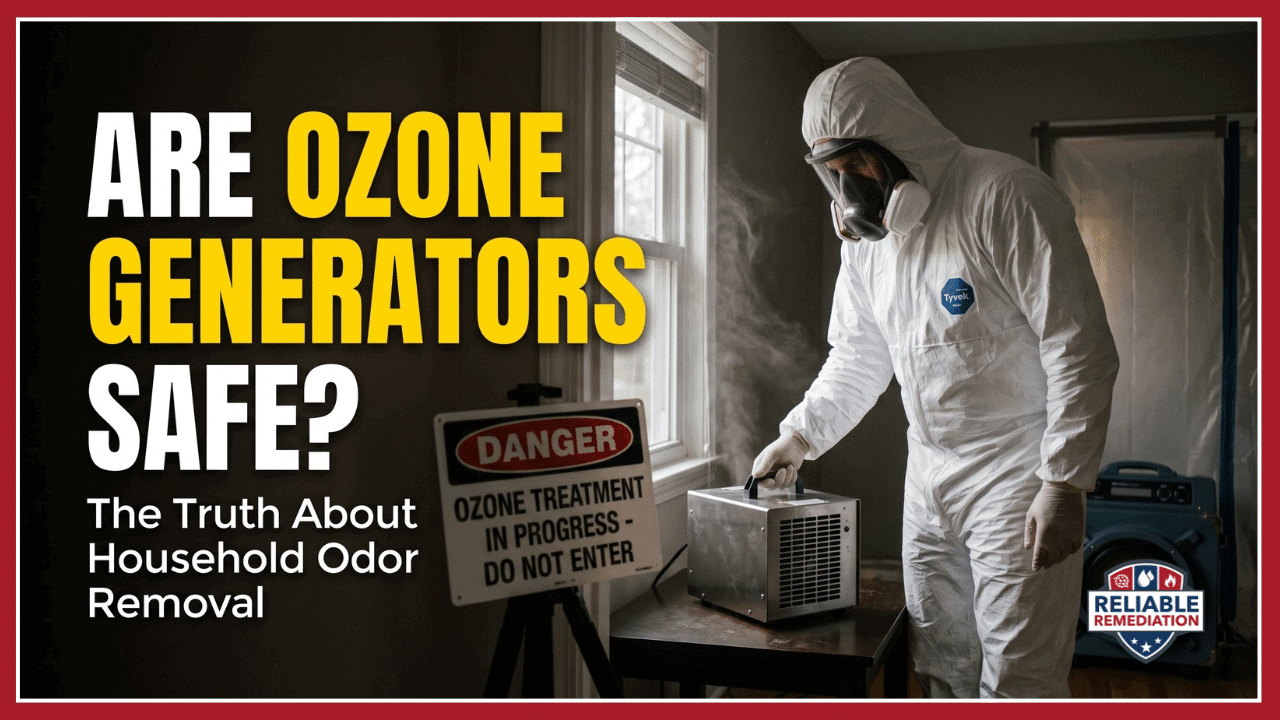
Ozone generator odor removal safety in a Connecticut home

The Frustration of Lingering Household Odors

Your home is your sanctuary, the clean and welcoming space where your family should always breathe easily. Whether you own a historic colonial in Tolland, a shoreline residence in Groton, or a modern home in Mansfield, persistent foul odors can compromise your comfort and peace of mind.

Few property issues are as frustrating as stubborn odors that refuse to dissipate. Whether caused by a furnace puffback, cigarette smoke from previous tenants, pet accidents, or hidden moisture, bad smells cling stubbornly to living areas. Homeowners often feel embarrassed inviting guests over, and living with offensive scents creates ongoing stress. Even worse, many property owners worry about hiring restoration contractors who make sweeping promises, use harsh chemicals without safety plans, or push expensive treatments that mask odors temporarily. You deserve transparent guidance from trusted local guides who explain the real building science behind indoor air quality.

Understanding Ozone: Chemistry and Occupied-Space Hazards

Ozone (O3) is a gas composed of three oxygen atoms. The standard oxygen molecule we breathe (O2) is stable, but ozone contains an unstable third atom. When ozone encounters an organic odor compound, that extra oxygen atom detaches and oxidizes the contaminant, altering its chemical structure and neutralizing the smell.

However, that high chemical reactivity is precisely what makes ozone hazardous. The Environmental Protection Agency (EPA) warns that the concentrations of ozone required to effectively break down indoor odors far exceed public health safety standards.

When dealing with ozone treatments, strict safety protocols are mandatory:

Severe Respiratory Risks: Inhaling ozone irritates the lungs, damages mucous membranes, causes chest pain, and exacerbates asthma or chronic respiratory conditions.
Total Evacuation Required: Ozone treatments must never take place in occupied spaces. Every human, pet, and live houseplant must be evacuated from the structure before machines are activated.
Material Degradation: High levels of ozone can corrode natural rubber, weaken carpet backing, degrade foam padding, and damage delicate electronics or wiring insulation.
Controlled Ventilation Periods: After an ozone generator finishes running, technicians must allow adequate time for ozone to revert back to standard oxygen (O2) before anyone re-enters the building without personal protective equipment.

Why Ozone Alone Fails: The Source Removal Principle

The most significant limitation of ozone technology is that it cannot eliminate the physical source of an odor. Some restoration companies set up ozone machines and commercial air scrubbers to diminish odors quickly, but this is merely a temporary band-aid.

If biological contaminants, pet urine crystals, synthetic soot films, or mold colonies remain trapped inside porous materials, the odor will return once the ozone gas dissipates. True odor eradication requires a comprehensive, multi-step process:

1
Physical Source Removal: Contaminated porous materials that cannot be restored (such as soaked carpet padding or fire-charred framing) must be removed and safely discarded.
2
Deep Structural Cleaning: Salvageable surfaces must be hand-washed with specialized degreasers or enzymatic cleaners to lift oil residues and organic matter.
3
Advanced Molecular Neutralization: Once the physical source is eliminated, technicians apply advanced deodorization methods, such as thermal fogging, hydroxyl generation, or chlorine dioxide, to break down any microscopic odor molecules embedded in wood joists or drywall.

Learn more about our comprehensive structural Odor Elimination services for Eastern Connecticut properties.

Safe Alternatives: When Hydroxyl Generators Are Better

For many residential situations, hydroxyl generators provide a safer and equally powerful alternative to ozone. Hydroxyls are naturally occurring atmospheric cleansers that neutralize odor compounds through oxidation.

Unlike ozone generators, hydroxyl machines can safely run in occupied spaces. They do not damage sensitive fabrics, electronics, or rubber, making them an ideal choice for active households or delicate contents. A certified specialist evaluates the building layout, building materials, and contamination source to choose the safest, most effective deodorization technology.

To review our complete service standards and client protections, explore our transparent Client Guarantees.

Your Trusted Local Guides in Eastern Connecticut

At Reliable Remediation, the mission is to help property owners across Windham, Tolland, and New London counties solve indoor air quality challenges safely and permanently. Based in Brooklyn, CT, Reliable Remediation works solely for the property owner, maintaining complete independence from insurance preferred networks.

Instead of quick coverups or high-pressure sales tactics, Reliable Remediation begins with a comprehensive, on-site odor evaluation. Technicians inspect building materials, measure indoor humidity levels, trace air currents, and locate the root contamination source before recommending any treatment.

Our Simple Three-Step Plan

1
Schedule an Odor Evaluation: A certified technician inspects the property, pinpoints the odor origin, and checks porous building materials.
2
Review a Customized Remediation Plan: Receive an upfront, line-by-line strategy detailing the exact physical source removal and deodorization methods required.
3
Reclaim Your Fresh Home: Technicians safely clean contaminated surfaces, neutralize odor compounds, and restore clean indoor air to your living space.
Reliable Remediation team serving homeowners in Eastern CT

Frequently Asked Questions

Is it safe to stay inside a house while an ozone generator is running?
No, property owners, children, pets, and live plants must be completely out of the house while an ozone generator operates. Inhaling ozone can cause serious respiratory irritation and lung damage, and the EPA explicitly warns against using ozone in occupied indoor spaces. Reliable Remediation strictly establishes secured containment and requires complete evacuation during all commercial ozone operations.
Why do bad smells often come back after an ozone treatment?
Odors return after an ozone treatment because the physical contamination source was never properly removed. Ozone only neutralizes odor molecules currently present in the air or on the surface of materials. If pet urine crystals, cigarette tar, or soot particles remain trapped deep inside subfloors or wall cavities, they will continue off-gassing once the ozone dissipates. Reliable Remediation focuses on complete physical source removal before deploying any molecular deodorization equipment.
What is the difference between an ozone generator and a hydroxyl generator?
An ozone generator produces an aggressive oxidizer that requires the total evacuation of people and pets from the structure. A hydroxyl generator uses ultraviolet technology to create hydroxyl radicals, which neutralize volatile organic compounds safely in occupied spaces without damaging delicate fabrics, rubber, or electronics. Reliable Remediation assesses the specific contamination type and property occupancy to select the appropriate equipment.
Can high levels of ozone damage household belongings or building materials?
Yes, excessive ozone exposure can accelerate the degradation of natural rubber, carpet underlayment, foam cushioning, wallpaper adhesives, and sensitive electronics. Professional technicians carefully calculate room volume, monitor concentration levels, and use precise run times to avoid damaging building materials. Reliable Remediation ensures all treatment cycles are carefully monitored by trained professionals.
Does an ozone generator kill active mold colonies?
While ozone can neutralize the musty smell caused by microbial volatile organic compounds, it cannot remediate active mold colonies rooted in porous drywall or wood framing. Furthermore, dead mold spores still contain allergenic proteins that trigger health issues. Reliable Remediation follows IICRC S520 guidelines, physically cleaning or cutting out contaminated porous materials rather than relying on gas or chemical fogging to mask mold problems.
How does Reliable Remediation ensure that household odor removal is permanent?
Reliable Remediation achieves permanent odor elimination by prioritizing the physical removal of the contaminating source first. Technicians extract contaminated matter, scrub surfaces with hospital-grade biocides or degreasers, and run commercial HEPA air scrubbers. Only after the physical source is gone does Reliable Remediation deploy advanced thermal fogging, hydroxyls, or chlorine dioxide to neutralize embedded odor molecules permanently.
How does the evaluation process work for odor removal projects?
Reliable Remediation conducts an on-site physical evaluation to locate hidden contamination sources, test moisture levels, and assess affected building materials. Property owners receive a comprehensive written proposal detailing the exact scope of physical cleaning and deodorization required. If professional remediation is needed and approved, Reliable Remediation applies the evaluation fee directly toward the project invoice under our written client agreements.
It’s Easy to Get the Help You Need
Blue Shield - Red Outline - White Star

Get an Evaluation

Blue Shield - Red Outline - White Star

Receive a Customized Plan

Blue Shield - Red Outline - White Star

Restore the Health of Your Home

Share This